

issue 230
June 2026
Fresh warm-up research suggests the first sixty seconds of a fight are won long before the fight starts.
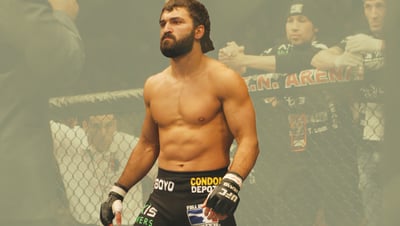
There’s a long list of MMA alumni who have failed to launch in the first rounds. Jiri Prochazka, who looked unstoppable before Pereira, got dropped in round 1. Johnny Walker seemed like the poster child for a world-beater backstage before his Magomed Ankalaev fight, but then crumbled by round 2 in their rematch. And let’s not get started on Michael Chandler’s latest showing. Many fighters and coaches have fallen foul of the odd phenomenon in which they look brilliant in the back room but then spend the opening minutes of the fight moving as if they’ve already run out of battery. The adrenaline dump is often blamed, while others talk about ring rust or not respecting their opponent. Sure, they’re sometimes correct, but research from May 2026 suggests another possibility. The body doesn’t instantly switch from waiting around backstage to their demands of a fight just because Bruce Buffer has yelled their names. The lungs, muscles, and nervous system can struggle to catch up, and according to these Italian researchers, the difference between starting sharp and spending the first minute playing catch-up may begin with the warm-up itself.
BREAKING THE BREATH
If you’ve ever sprinted back after realizing you’ve left your phone in an Uber, you’ll know the feeling where your legs are moving, but your lungs haven’t quite caught up. Italian combat sport researchers have a phrase for that rather unpleasant sensation: “breaking the breath.” According to their paper, that horrible feeling might be one reason some fighters spend the opening exchanges trying to find themselves. The thinking is that oxygen uptake in trained combat athletes can take 2-3 minutes to reach a steady state, which means the lungs, muscles, and nervous system are effectively playing catch-up while somebody is already trying to jab your temple. Fortunately, they have offered a solution in the form of a concept which they called Metabolic-Respiratory Priming (MRP). By deliberately exposing athletes to a few minutes of intermittent high-intensity work before competition, coaches aim to “break the breath” backstage instead of waiting for the fight to do it for them. Okay, so this isn’t exactly a surprising revelation, but there are some nuances needed to nail that round one.
SAVE YOUR BEST FOR LAST
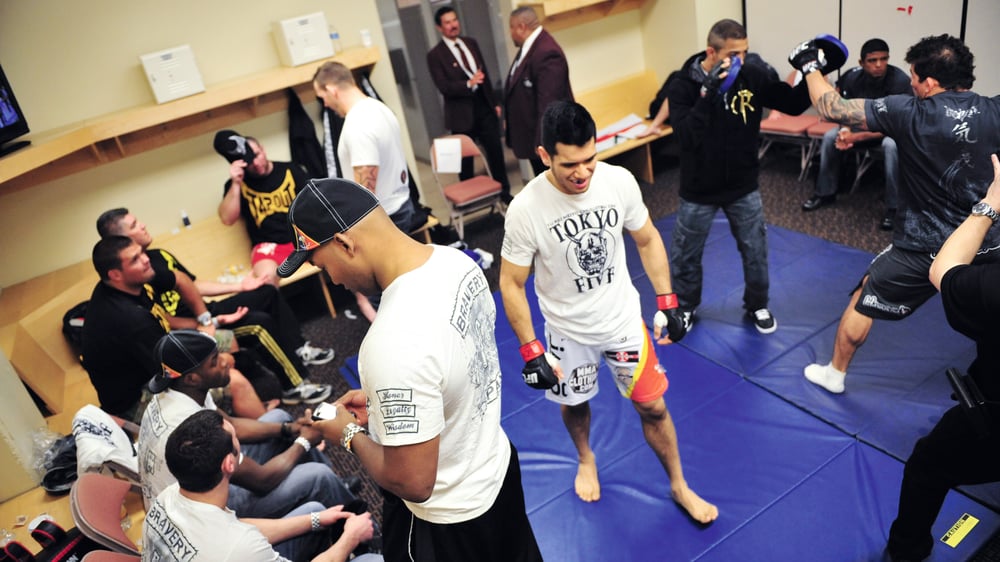
Plenty of fighters treat pre-fight and pre-training warm-ups like brushing their teeth. Get it done early and forget about it. The Italian researchers behind MRP think that might be an ass-backwards approach. Their unique framework places the most intense part of the warm-up near the end rather than the middle or beginning, followed by a short recovery period and even a final explosive stimulus. In other words, the body doesn't need to be woken up thirty minutes before the fight. It needs to be awake precisely when the fight actually starts. The authors also noted that these priming effects may begin to fade after 15 to 20 minutes if a fighter is just sitting around, suggesting there is a tight little sweet spot between arriving cold and arriving exhausted. It might explain why some fighters look incredible hitting pads backstage, only to emerge from the tunnel moving as if they've just flung their eyes open from a long nap. In combat sports, timing isn't just important when throwing punches. It might matter before the clock has even ticked over.
NO STRETCHING LIKE IT'S 1997
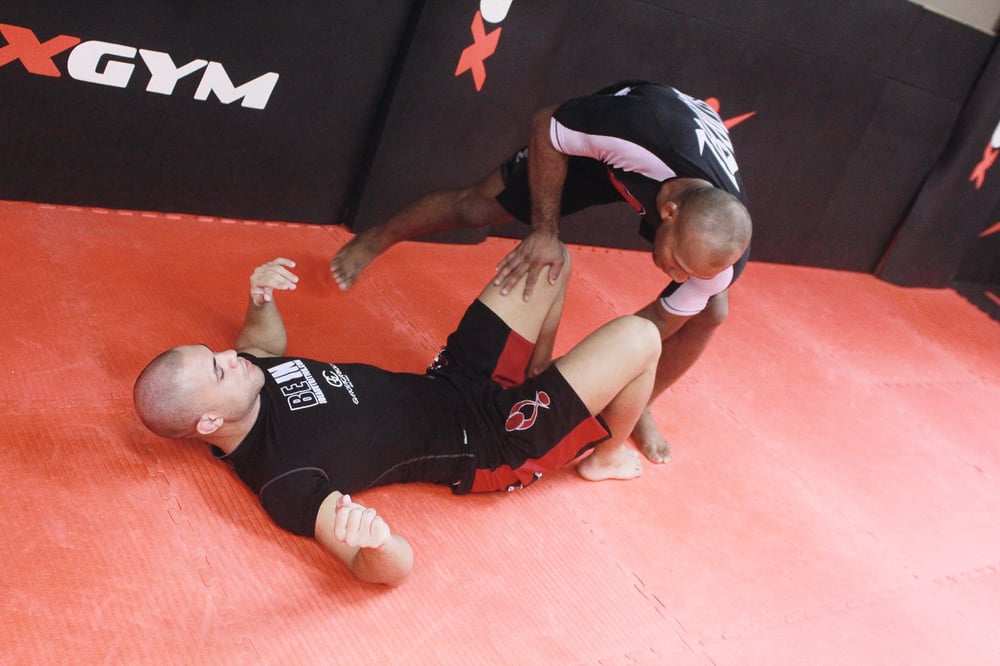
We all know that the static stretching forced upon every PE class has its place, but it might not be right before a fight or a workout. Fighters like GSP and BJ Penn had miraculous flexibility, but according to combat sports researchers, that old-school approach might be about as useful as a knife in a gunfight. Reviewing the warm-up practices used before training and competition, the authors noted that static stretching can actually reduce strength, speed, balance, and explosive power. Everything you don’t want in round one. Again, no surprises there. Instead, they recommended building warm-ups around dynamic, fight-specific movements that increase in intensity gradually without causing excessive fatigue. In other words, don't warm up for a fight like you're about to run a marathon or audition for a yoga retreat. Raise your body temperature, break a light sweat, and rehearse the core MMA movements you'll actually use. That means trunk rotations, arm circles, hip circles, arm swings, and leg swings. It also involves sprawling, shifting levels, rotating the trunk, moving the hips, and performing explosive movements rather than jogging laps as if you're training for a marathon. According to the Italian researchers, the lungs aren't the only things that need to catch up. The nervous system likes a rehearsal, too. The goal isn't to win the warm-up. It's to arrive at the opening bell feeling supremely ready rather than desperately hoping round one serves as an easy way to find your distance.
DON’T TURN THE TRAILER INTO THE MOVIE
Warm-ups risk becoming victims of their own success, with too much time spent activating muscles and too little left for the main event. Yet according to a large 2025 review examining warm-up strategies, much of the performance boost may come from something remarkably boring. Simply getting warm. Raising muscle temperature appears to do much of the heavy lifting, with surprisingly little difference between active exercise and passive heating methods. In other words, the body seems to care less about how it gets warm and more that it gets warm. The body doesn't need a Broadway production. It just wants to know what game it has turned up to play. This is why the new MRP framework prioritizes high effort at the very end of the warm-up. After general movement and technical rehearsal, fighters should deliberately “break the breath” with short bursts of high-intensity work, recover, and step into competition already on their second wind. The goal isn't to leave the back room looking like you've already gone five rounds with Merab Dvalishvili. It’s to start every competition with your lungs, muscles, and nervous system all reading from the same script. This is unfortunate news if you've invested heavily in color-coded resistance bands and a 17-step activation routine that requires its own instruction manual. The perfect warm-up leaves you dangerous, not exhausted.
WIN ROUND ONE
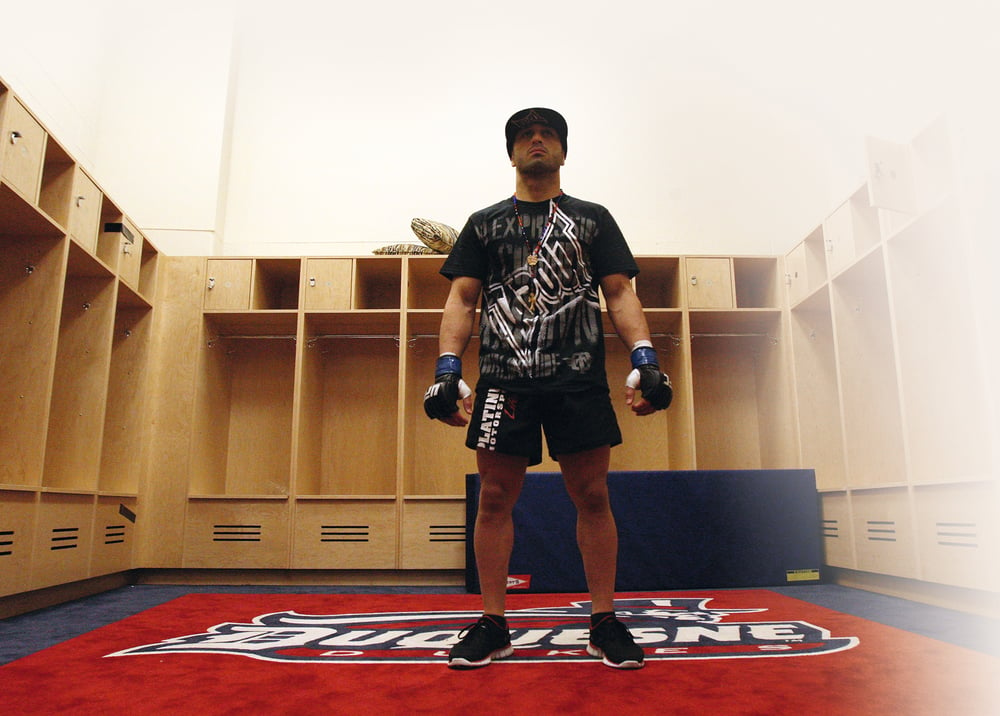
Nobody has ever won a fight because they looked sensational hitting pads backstage. What matters is what goes down in the first 60 seconds, and the emerging science suggests some fighters may have been thinking about warm-ups the wrong way. It's not about seeing stars before you've even made the walk. And it's certainly not about turning preparation into a separate workout. It's about arriving ready to breathe and react. The initial moments of a fight or just sparring are too valuable to spend introducing your lungs to hard work, your nervous system to what’s expected, and your muscles to the sport they've supposedly been training for all camp. Round one is dangerous enough without using half of it as a mapping tool. In a sport where consciousness can disappear with one mistake, perhaps the smartest thing a fighter can do is make sure the body has already heard the opening bell before your name has been shouted into the microphone.
...