


issue 230
June 2026
Ray Klerck explores the brutal tests coaches use to predict who loses their puff first and why the latest science suggests there may be no magic number.
For the first two rounds of Freedom 250’s main event, Ilia Topuria looked every bit the destroyer who had ripped through MMA royalty that includes the likes of Alexander Volkanovski, Max Holloway, and Charles Oliveira. His combinations were sharp, his timing immaculate, and the world wondered how any carbon-based lifeform could withstand the body shots he was dishing out. But Justin Gaethje just winced and kept marching forward until something strange happened. After weathering the storm, Gaethje dragged the fight into the territory he’d reached 14 times in UFC, the third round. Then he ventured into the championship rounds, where he’d been on four previous occasions. For Topuria, apart from his five-round battle with Josh Emmett, those latter rounds were largely uncharted. This might be a tale of how Ilia became a victim of his own success, and Gaethje discussed it on The Joe Rogan Experience.
“Before this, he was the guy you couldn’t get through, that you couldn’t push through, that you couldn’t survive with. And once I showed people that all you gotta do is get through that, then nobody is ever going to go in there thinking he’s unbeatable now. And that was his identity. That’s going to be such a tough task for him, to fight people that aren’t scared of him.”
When you finish most opponents before the championship rounds, how do you know what your round-four capacity really looks like? Coaches and sports scientists have spent decades wrestling with that problem. In the process, they have devised a collection of brutal tests designed to reveal that it’s not just about who starts fastest, but who can remain the most dangerous when fatigue finally begins to collect its debt.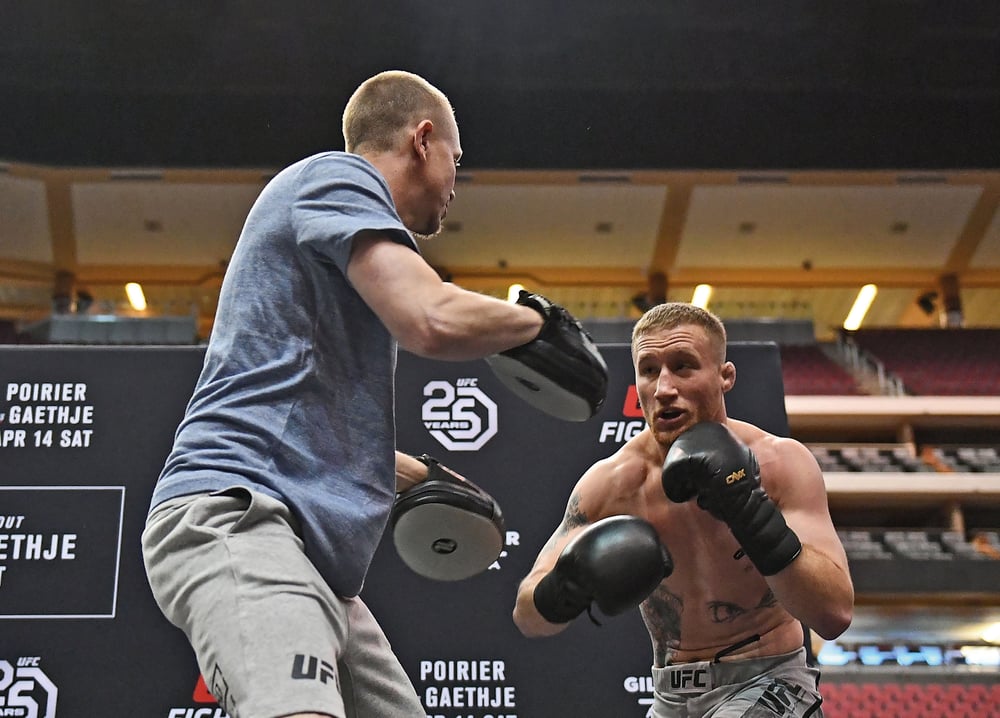
THE NUMBER NOBODY TALKS ABOUT
MMA loves power. Horsepower. Knockout power. Star power. But very few mince around the water cooler bragging about how much of that staying power they still have left when the wheels start coming off. Yet, according to a June 2026 review, sports scientists have become increasingly interested in exactly that. Not who starts the fastest, but who falls apart the slowest. The awkward part is that nobody can agree on the best way to measure it. Researchers examined everything from the puke-worthy Wingate bike test to repeated-sprint tests and sport-specific protocols for taekwondo, kickboxing, Brazilian jiu-jitsu, and MMA. Some researchers favor exercise bikes. Others prefer sprinting. And increasingly, combat sports scientists are trying to design tests that resemble the sports themselves. The main takeaway, rather inconveniently, is that no universal testing protocol has emerged as king. Fighters don't all get tired in the same way.
THE IN THE TRENCHES THINKING
Of course, that fatigue hit everyone differently, but we floated the concept past the incredible Joel Jameson, a world-renowned strength and conditioning coach to fighters like Demetrious Johnson and author of Ultimate MMA Conditioning.
“What determines whether a fighter can maintain power throughout a fight is conditioning,” he told Fighters Only. Fitness is just a measure of a physiological capacity to produce a specific output. We can measure things like anaerobic power, or anaerobic capacity, or aerobic fitness through things like VO2 max, power at lactate threshold, etc. We measure some sort of output, and then we say that’s their level of fitness in that specific demand. We have a lot of different ways to measure various forms of fitness, but conditioning is how well all the different types of fitness are put together and able to be expressed throughout a competition. This concept is very similar to the nature of combat sports themselves. You could never just measure someone’s punching technique or power and predict how well they were going to perform in a fight. Looking at this would only tell you one particular skill set among many that are required to be successful as a combat athlete. Measuring one single skill, like striking or grappling, is the same as measuring one particular type of fitness.
Just looking at one single piece of the puzzle like this will never be enough to tell you what the whole puzzle looks like, so I don’t think this is the right approach to begin with.”

FAILED FITNESS TESTS
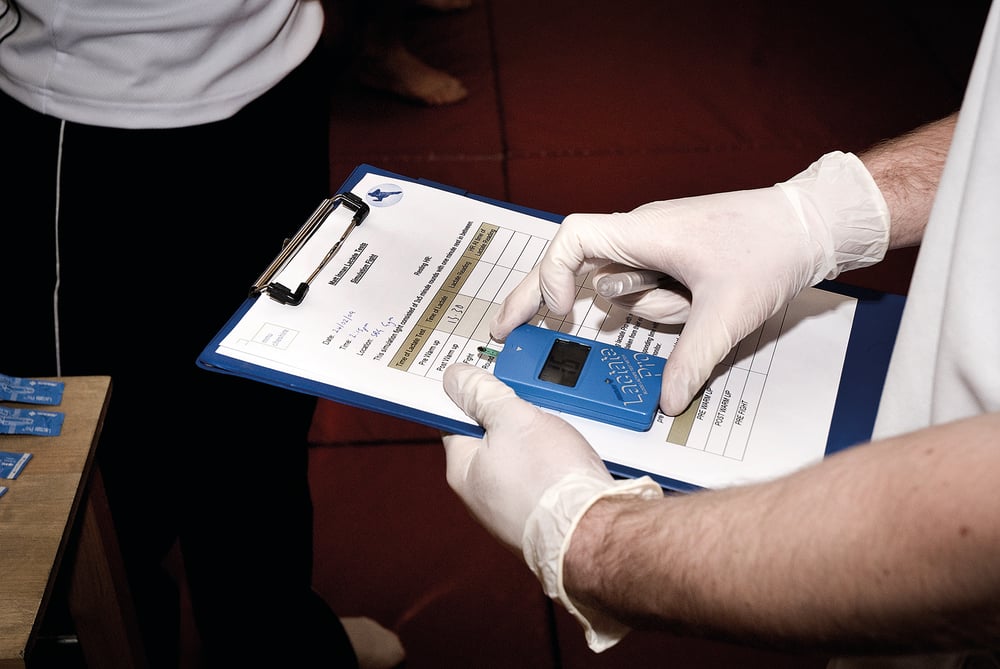
If you've ever wondered what thirty seconds in purgatory feels like, sports scientists have already created the gauntlets. First, there is the Wingate Test, an all-out 30-second bike sprint against a resistance set to your body weight. A fighter who produces 1,000 watts at the start but still manages 850 watts at the end will score better than somebody who explodes out of the blocks at 1,200 watts only to collapse to 700 by the finish. The number that interests sports scientists most isn't the first one. It's the drop-off. If that doesn’t interest you, researchers developed the Running-Based Anaerobic Sprint Test, or RAST for short. For this, you’d sprint 35 meters as fast as possible, rest for 10 seconds, and repeat the process six times. Record the time it takes to do each sprint and compare the results. If the times stay relatively close, congratulations. Your ability to resist fatigue is holding up nicely. But if your final efforts look as if somebody has secretly replaced your legs with wet noodles, your fatigue index is beginning to show. The beauty of the test is that it can be run almost anywhere with no laboratories or fancy equipment. But many sports scientists don’t believe these are always applicable to MMA.
THE REAL TESTS
Scientists like Jameson hold the view that conditioning is the result of how all of their fitness qualities are developed and integrated so that they’re able to sustain power output throughout the entire fight.
“To assess this, we need to understand how different types of fitness are all developed and whether or not they fit the performance model for the sport,” explains Jameson. “This is because there are always tradeoffs in human performance, and developing a very high level of one type of fitness often comes with the cost of not being able to develop another area of fitness to the same extent. The result is that to be successful in combat sports, you have to develop several fitness capacities in the right amounts relative to each other. The only way to assess this is to understand the model of combat sport performance and then use a series of fitness tests to see how each athlete is developed and whether or not they have the various fitness capacities developed appropriately or not. That’s not the end of the conditioning story, however, because measuring a broad range of fitness qualities like this will only tell you how much power someone can generate and sustain over short bursts, as well as what they can maintain throughout an entire fight. This sets their potential, but it’s their skill, technique, and movement that ultimately dictate how effectively they can turn that power output into effective striking, wrestling, grappling, etc. A fighter with very inefficient movement, skill, and technique will waste much more energy and fatigue faster than a fighter that can generate and sustain less power if that power comes at a lower energy cost because they have greater movement efficiency.”
THE PAD HOLDER FROM HELL
Running and cycling are one thing, but coaches have spent the last few years trying to develop tests that more closely resemble MMA. One of the more interesting examples came from Brazilian researchers, who developed an MMA-specific anaerobic test that matched up well with traditional measures of anaerobic performance. In other words, the test appeared to measure something useful rather than just providing an excuse to run and ride in the name of suffering. To do it, fighters do three rounds of 20 seconds with just 10 seconds recovery in between. Each round involved a takedown, standing punches, and ground-and-pound. The number posted doesn't really matter. Nobody cares whether you landed 97 or 117 punches. What matters is whether your output collapses like a cheap camping chair or if you can still produce power even after your lungs are burning. The researchers say that the total number of strikes showed a strong relationship with anaerobic capacity, suggesting that the test measured something useful that looks like an actual fight. But according to the June 2026 review, MMA and many combat sports sciences are moving away from isolated measurements and towards considering all the other variables a fighter faces. The take-home message is that there isn’t a single NFL-combine-like number that explains everything, which might explain why a fighter looks sensational in the gym but terrible on fight night.
THE BATTERY CHECK
Everyone has looked at a tired fighter and questioned his cardio, but sports science is beginning to suspect that might be a bit like blaming your gloves when you’ve lost a fight. That's why the latest thinking has shifted away from obsessing over one magic number and toward monitoring the athlete as a whole. Instead of asking, “What's my fatigue index?” fighters might be better served by asking a few much simpler questions like how I slept and do my legs feel heavy, which is something Jameson agrees with.
“The final aspect of conditioning is pacing and energy awareness/management. This is because the two big aspects I just talked about, various fitness qualities and movement/skill/technique, or what set the limits of the pace and output that a fighter can express in the form of skill, but a fighter can still easily make the mistake of exceeding those limits, and the cost of that is fatigue. There is no amount of fitness or level of skill that can be developed that allows someone to go 100% for 15-25 minutes of fighting, so energy management and pacing always play a huge role. This is why a fighter that has lower measures of different types of fitness, but much better movement, skill, and energy management, will often outlast an opponent with higher measures of fitness that are wasted through poor technique and pacing. In this example, I would say that the first fighter is better conditioned, even though the second fighter is more fit. This is why trying to predict fatiguability, or whatever term you want to use, will never be possible by looking at a single fitness test. Human performance, especially in such a complex sport, is just nowhere near that simple.”
THE FINAL TEST
None of those questions is particularly sexy, and they won't impress anyone. But according to this new review, factors such as body composition, hydration status, sleep, training load, neuromuscular performance, and even subjective wellness all contribute to how fighters perform when mid-fight fatigue comes knocking. Which means the fighter who loses his puff first may not have poor cardio at all. He might just be under-recovered. And perhaps that's the most uncomfortable lesson in all of this. After decades of searching for the perfect test, sports scientists are slowly arriving at a conclusion that fighters have known all along. Fighters aren't laboratory rats. They're messy, complicated creatures with mortgages, divorce stress, bad sleep, and occasionally newborn babies. Which makes predicting who will drown in the latter rounds a lot harder than simply strapping them to an exercise bike and hoping for the best. Sometimes it's just the stubborn bastard who still has enough battery left to be a nuisance after fatigue has turned up demanding rent.