

Issue 232
August 2026
Before championship belts were on the line, the world's greatest fighters were locked in their own battles. We delve into the gritty and inspiring MMA origin stories that forged these warriors into the legends they are today.
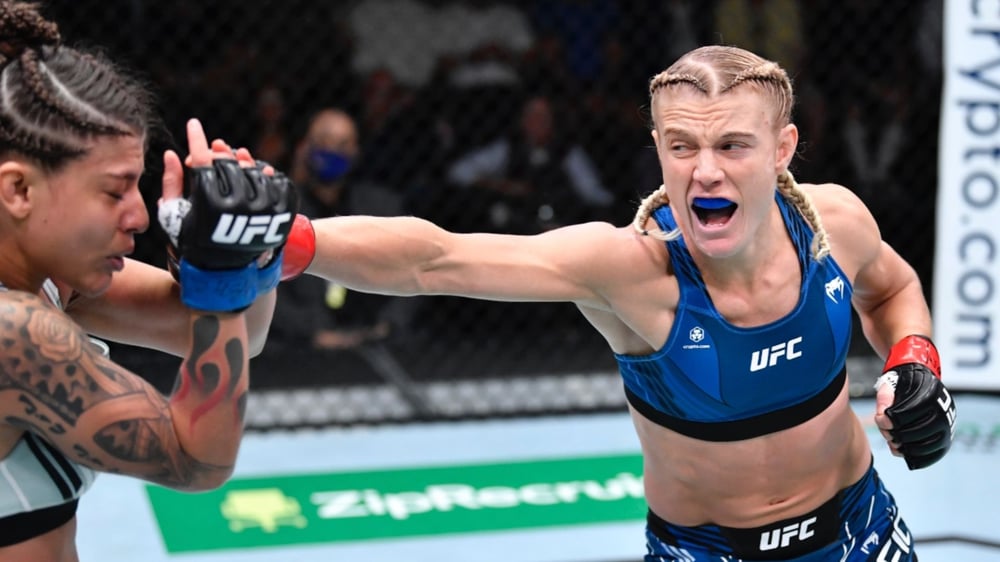
MANON FIOROT – THE FRENCH DESTROYER
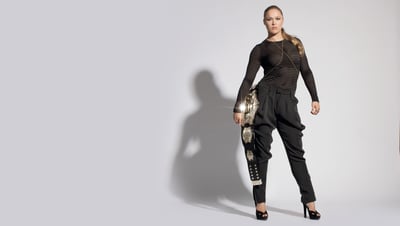
Manon Fiorot was born on May 3, 1990, in Nice, France, where sport became part of her life almost immediately. Before there were gloves, shin pads, or dreams of the UFC, there was snow found on the French Alps. Fiorot competed as a snowboarder during her youth, developing the balance and coordination that would eventually become rather useful for someone whose job involves kicking people in the head. Martial arts entered the picture early on when her parents took her to a nearby karate gym. It was initially little more than another activity for an athletic kid, but Fiorot quickly discovered she was very good at it. Speaking to UFC.com about how it began and the person she looked up to most, Fiorot shared:
“At seven years old in Karate, because there was a gym close to my home,” she explained in her somewhat broken English. “My hero is my dad.”
Fiorot became very good, very quickly. She won the Division 2 national championship, earned her black belt, and eventually finished third in the French First Division, earning selection to the French national karate team. Point karate also taught her the useful art of arriving early, hitting somebody and leaving before they could return the favor, something that remains obvious in the long-range striking style she uses today. By her late teens, however, Fiorot yearned for more contact. She moved into Muay Thai and kickboxing, compiled a perfect 15-0 amateur K-1 record and won two French national Muay Thai titles. MMA became the obvious next choice, although unlike most of the sports she'd tried until then, it didn't immediately hand her a trophy. Fiorot competed at the 2016 IMMAF World Championships but failed to reach the podium. After spending much of her sporting life being very good at things, she'd finally found something willing to argue back. Rather than walking away, she returned the following year and won gold at the 2017 IMMAF World Championships in Amman, Jordan. Amateur MMA had presented a problem, Fiorot had solved it, and now she wanted to find out what happened when people started getting paid.
“I don't want the judges to choose the winner. I'm here to win and to fight, so absolutely I want to show my skills. I see a knockout, for sure. It is the beginning of a dream.”
Under head coach Aldric Cassata at Boxing Squad in Nice, Fiorot continued adding wrestling and grappling to the striking game she'd been building since childhood. She became the EFC champion, the UAE Warriors champion, and the first French woman to win in the UFC. There was no single dramatic moment when a young Fiorot decided she was destined for the Octagon. She just kept finding increasingly difficult sports and becoming annoyingly good at them. Snowboarding became karate. Karate became Muay Thai. Muay Thai became MMA. Somewhere along the way, the little girl who walked into the neighborhood karate gym became one of the best fighters France has ever produced.
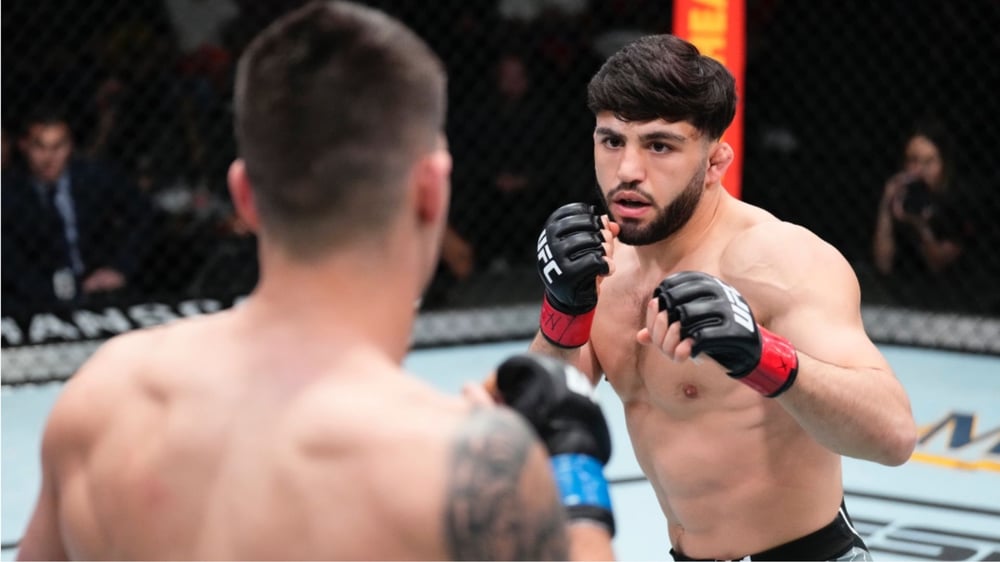
ARMAN TSARUKYAN – MOUNTAIN DRIVEN
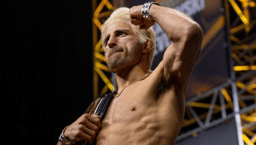
Arman Nairi Tsarukyan was born on October 11, 1996, in Georgia before his family relocated to Russia. Growing up alongside his older brother, Artur, and sister, Isabella, Tsarukyan wasn't raised in the kind of poverty that usually gets wheeled out in fighter origin stories. His father, Nairi, built a highly successful construction business from the ground up, but having money didn't mean his children were encouraged to sit around waiting for some of it to become theirs. His father supplied the work ethic, while his athletic mother made looking after yourself another normal part of family life. Between them, Tsarukyan believes he inherited much of the machinery that would eventually make him a fighter.
“From dad I learn, you gotta work to get something,” he said on the PBD Podcast. “Not someone gonna give you something, no. Don't wait to anybody to give you or like to tell you. If you fail, stand up and go try it again. My mom, she's athletic. She likes working out. She likes to take care of her body. From my dad, hard work. From my mom, athletic thing.”
Long before MMA entered the picture, Tsarukyan had another professional sport in mind. He played ice hockey throughout his childhood and spent years believing the NHL might be his future. By 17, however, he reached one of life's less enjoyable conclusions: wanting something badly doesn't necessarily mean you're going to be good enough to make a living from it. He walked away from hockey and did what many sons with successful fathers eventually do when Plan A disappears. He went to work for Dad. That lasted three months.
“I was playing professional from 10 to 17, hockey. I wanted to go NHL. And then when I was 17, I understood like I cannot be a good hockey player and they said, 'OK, it's done. I'm going to work with my dad.’ And I was working three months with my dad and said, ‘ No, this is not my thing.’ I said my dad, ‘Can I go to grappling school?’ And he said, ‘Yeah, dude.’”
Though there are those who question this quote about playing pro sports at 10 years old, the net result was that construction's loss became grappling's gain. Tsarukyan progressed remarkably quickly and became a Russian champion within a year. More importantly, he'd found a sport in which the outcome belonged entirely to him. There were no teammates having a bad night and nobody else to blame when things went wrong. MMA soon caught his attention, although his parents were considerably less enthusiastic. As any father would, there were worries about his well-being. Tsarukyan, armed with the superior decision-making abilities common to teenage boys everywhere, decided to have one fight anyway.
“I asked my dad, ‘Can I do one fight in MMA?’ He said, ‘You're stupid. They gonna break your head. Why you need that?’ I said, ‘Just one fight.’ And my mom was crying all day, ‘Don't do that because someone is going to break your head.’ I went there in 15 or 20 seconds; he knocked me out. My dad said, ‘What are you doing? Like I told you, don't go there, it's not your thing.’ And I was so mad. And I said, ‘OK, give me one year, and can you send me to Thailand?’”
There are easier ways to discover your parents were right. For Tsarukyan, getting knocked out in roughly the time it takes to tie your shoes didn't end his MMA experiment. It annoyed him enough to make it serious. He went to Thailand and trained relentlessly before returning to Russia with one particularly important piece of unfinished business. Tsarukyan eventually fought the man who had knocked him out again and, this time, choked him out. A dominant run through the regional scene followed until, at just 22 years old, he accepted a short-notice UFC debut against Islam Makhachev and walked away with Fight of the Night honors. Tsarukyan could have returned to the successful family business after hockey failed. He certainly had another opportunity after his first MMA fight lasted about 20 seconds. Instead, the kid taught that failure meant getting back up and trying again took his father's advice perhaps a little more literally than intended.
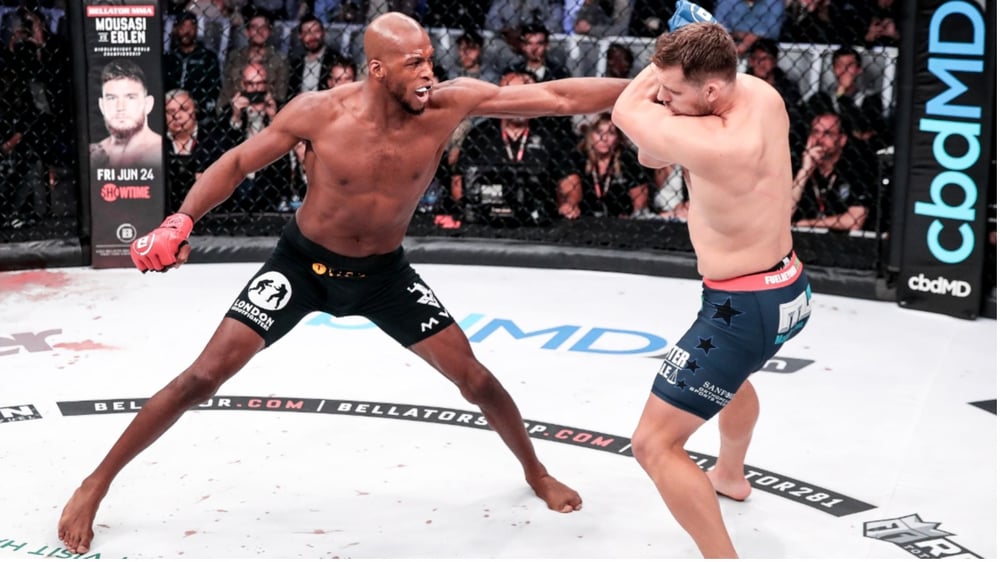
MICHAEL PAGE – THE FREESTYLE VIRTUOSO
Michael ‘Venom’ Page was born on April 7, 1987, in London, England, into a family where martial arts wasn't really optional. His late father, Curtis Page Sr., a British Telecom worker from Trinidad, and his mother, Pauline Reece, a nurse from Jamaica, were both Lau Gar kung fu practitioners who met through their master, Stan Brown. Page grew up as one of ten children, including three adopted siblings, which meant the family already had enough people for a reasonably competitive fight card without inviting anyone over. Page started training under his father at three and entered his first tournament at five. With two martial artists as parents and older siblings already winning competitions, all the ingredients appeared to be in place for another child prodigy. There was only one small problem. Michael kept losing.
“I got two other brothers than me,” he told Joe Rogan. “At the time, we were fighting around, but they were winning everything. I used to get my ass kicked everywhere we went. Every single weekend we're driving to Birmingham, to Manchester, to Scotland. Coming back and I've just got a busted lip. I got destroyed for four, five years.”
Every weekend, the Page family piled into the car, drove somewhere around Britain and watched Michael get beaten up. Then, apparently unconcerned by the emerging pattern, they did it again the following weekend. Four or five years of that might have convinced another child to investigate whether piano lessons were an option, but Page kept turning up. Perhaps that was because living with nine siblings also meant disagreements weren't exactly rare. Fortunately, Curtis Sr. had developed perhaps the most martial-arts-family solution imaginable. You weren't allowed to scrap around the house. If talking couldn't settle the disagreement, however, there was a perfectly good mat available.
“We had to do it,” he said. “He'd always say, ‘This is not for out here. This is for in there. If you got an issue, verbalize it. And if you still have an issue, we can sort it out in there.’ My dad, he used to say, ‘That's not your sibling on the mat, but straight afterwards, make sure you pick that person up, make sure they're good.’ I never needed anger. It's just something that keeps us all together.”
Those family sessions also helped create the fighting style that would eventually make Page famous. Instead of teaching him to plant his feet and trade heavy shots, his family developed a hands-down freestyle approach based around speed, timing and distance. The idea was simple enough: get close enough to hit somebody and then make sure you aren't hanging around when they try to return the favor. For years, though, the theory wasn't producing much silverware to clean. That changed at the ISKA World Martial Arts Championships in Orlando, Florida. Having spent years losing on the British circuit, Page entered a huge open bracket and fought more than ten times in a single day against unfamiliar international competition. He won the tournament and took home a six-foot trophy, which was a considerable upgrade from the busted lips he'd previously been bringing home. Something clicked. Page returned to Britain and the kid who'd spent years losing suddenly became extremely difficult to beat. His confidence grew so quickly that fighting other children apparently wasn't interesting enough anymore.
“When I was 13, I asked my dad, ‘Can I please fight in the seniors?’ And the seniors are 18 plus. I won my senior division for my weight. And like I said, these are big men. I destroyed some of the best fighters in the UK at the time.”
The nickname ‘Venom’ followed, given to him by fellow kickboxer Marvin Francis after the classic kung fu film The Five Deadly Venoms. Page went on to win 10 kickboxing world titles and more than 25 British championships before eventually carrying the same strange hands-down style into MMA with London Shootfighters, producing highlight-reel knockouts across Bellator and, eventually, the UFC. To anyone seeing MVP fight for the first time, the low hands, dancing, spinning attacks and general refusal to stand like a normal fighter can look like a style invented specifically to give traditional coaches high blood pressure. In reality, it took years to build. Thousands of childhood rounds, countless weekends traveling Britain with his family and years of getting beaten up eventually taught Page the lessons he needed to become a winner.
...