

issue 219
July 2025
The cutting-edge research uncovered by Ray Klerck explores the neuroscience, genetics, and psychology behind meltdowns outside of competition, and why some fighters explode while others remain ice-cold.
Recently, Sean Strickland stormed onto the canvas at Tuff-N-Uff 145. He didn’t do this because he’d lost control. In his world, losing control is perhaps his form of control. And like most of his meltdowns, this one wasn’t born from calculated aggression, it was a primal whiplash were tried to throw punches at Luis Hernandez who Strickland claims called him a bitch post-fight. But if you think this was just Strickland being Strickland, you could be missing the deeper pattern and the emerging genetic science behind it. There’s a technical name for what we saw: disinhibition under stress. It’s a system where the standard brakes on behavior snap, and raw emotion takes the wheel. And for some fighters, especially those low on the genetic dial for conscientiousness, that wheel might be permanently on the swerve.
A DOPAMINE GENE THAT WOULDN’T LET GO
To understand why, it’s more a matter of molecular biology than nurture. A May 2025 study published in Genesuncovered a fascinating link between conscientiousness and a polymorphism in the dopamine D2 receptor gene: DRD2 rs1799732. They found that elite MMA fighters with this genotype exhibited significantly higher levels of self-control and goal-directed behavior compared to their counterparts. The fighters lacking this genetic variant showed lower levels of impulse control and struggled to regulate emotional responses under pressure. That matters because dopamine isn’t just about pleasure. It can impact your motivation, impulse control, and long-term focus. Low D2 receptor density means less control in high-stress situations, where you might be inclined to bust into a post-fight octagon in your flip-flops with an intent to uppercut the winner thanks to a perceived slight. So, when a fighter with the wrong neurological lottery ticket feels disrespected, sees injustice, or wants to defend a teammate, their internal dopamine system overloads. The brain says, “Maybe don’t,” but their genetically clenched fists are already punching a breeze into the air.
NOT EVERY FIGHTER SNAPS
Most elite fighters are renowned for staying cooler than a monk in a meat freezer. Losing your cool is the fastest way to lose a fight, and some of this is down to demographics. Another study, published in June 2025, examined resilience, stress, and coping in MMA athletes, categorizing them into three psychological profiles: the resilient, the reactive, and the rattled. The most significant predictors of a rage-fuelled brain snap? Age, life responsibility, and mental endurance. Fighters in the high-resilience clusters were older, had dependents, and displayed stronger psychological coping skills, such as coachability, concentration, and the ability to handle adversity. They also scored higher across recovery markers like general well-being, success, being in shape, and social relaxation. Short answer? Fighters with something to lose were better at keeping it together. As you’d expect. The fighters who were younger didn’t fare as well. They generally had no dependents and relied heavily on avoidance strategies, such as ‘freedom from worry.’ Somewhat surprisingly, they also scored lower in energy and higher in emotional stress. When the tank’s empty and you’ve got no one counting on you to hold it together, the fuse burns quicker. It’s not just fight experience that builds restraint. Instead, it's real-world accountability holding up the stop sign. So perhaps the difference between walking away from a challenging situation and starting to swing your way out of it is just having someone you love waiting for you at home.
WHEN LOYALTY TURNS TO FURY
Strickland didn’t throw punches for sport. He was defending his honor and the team he was cornering. Loyalty will always be currency. If your guy gets clipped by someone you think cheated or disrespected the code, your amygdala doesn’t ask for context. It pulls the pin. This is why many MMA regulators face a tricky paradox: the same raw emotion that makes fighters compelling also makes them volatile. Passion sells tickets. However, passion without regulation can also lead to lawsuits and punishment from state athletic commissions. It’s also why fans simultaneously cheer and recoil. Strickland’s outburst gets millions of views, but under the surface, commissions are quietly printing out suspension forms, and insurers are hyperventilating.
APPLAUSE FOR THE UNHINGED
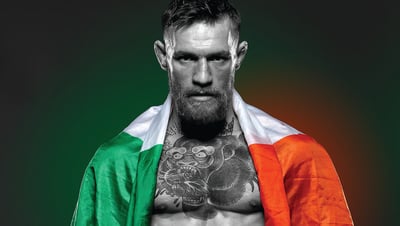
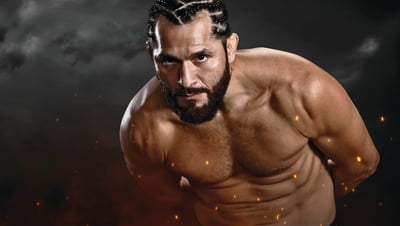
Sadly, the more a fighter acts out, the more the crowd roars. That reinforces the behavior. It’s a behavior that starts in childhood and often lasts into adulthood, says a paper at the University of Texas at Dallas. We’re taught peer pressure disappears, but this research says it sticks around long after you start paying taxes. In the MMA world, it’s like giving a toddler candy for throwing a tantrum, and social media fans are feeding these flames. As a reward, fighters receive likes, dollars, and a sense of identity. Conor hurling a luggage cart into Khabib’s bus window. Diaz choking a man in the street. Masvidal flying kneeing his way into highlight reel sainthood. All these moments bleed into the brand of the fighter because impulsivity is always marketable.
THE SCIENCE OF SNAP
Back to the brain. Disinhibition under stress is a measurable neurological response. When the prefrontal cortex (responsible for planning and decision-making) is compromised by adrenaline, trauma, or poor dopaminergic regulation thanks to genes, it checks out. That’s when the limbic system lights up and someone sees red. Add years of sparring and a culture that valorizes retaliation, and it’s a wonder more fighters don’t lose it in public places more often. The Genes study showed how a genetic predisposition meets the environment. Fighters with ins/ins DRD2 genotypes may naturally possess stronger emotional brakes. However, even those without this gene can establish control through structured routines, clear goals, and consistent coaching. Restraint is a muscle, but if you were born with less to flex, you’ll always find it hard to lift that weight.
THE REAL CAGE BETWEEN THE EARS
So, what do we do with all this? Well, maybe nothing. As long as our culture prizes chaos, sports will always have a back door for emotion to sneak in. But that doesn’t mean we can’t understand it better. Sean Strickland isn’t the exception. He’s the most recent visible symptom of a deeper neural cocktail that MMA shakes harder than almost any other sport. Punches thrown outside of a planned bout might look like breakdowns. But sometimes, they’re just dopamine-fueled expressions of loyalty, stress, and unresolved wiring. And like any good fight, it’s complicated.