

issue 219
July 2025
Before championship belts were on the line, the world's greatest fighters were locked in their own battles. We delve into the gritty and inspiring MMA origin stories that forged these warriors into the legends they are today.
MAX HOLLOWAY – WAIANAE’S WILD SON
Jerome Max Holloway was born on December 4, 1991, in Honolulu, Hawaii, and raised in Waianae, a place he once described as a beautiful but hard place. He grew up alongside his older brother and younger sister in a household marked by a certain level of hardship, which clearly forged his tough persona. His mother worked multiple jobs. His father struggled with addiction and left when Max was still young.
“Both of my parents were heavy drug users,” he told BIM Fighting. “My dad used to beat my mom. I think the drugs were their escape, their way of coping. The last time I saw my dad, I was around 10 or 11. I haven’t seen him since. I pray for him, but he’s no longer part of my life.
When things got bad at home, Max and his siblings were largely raised by their grandparents, who stepped in to give them some stability.
“I had to endure so I can get my story out later on,” he told MMA Fighting, reflecting on that time.
When Max was young, fighting was less of a sport and more of a daily reality, thanks to where he grew up.
“In the city I’m from, Waianae, there’s a lot of fights and people like to fight, so in a street fight, you just can’t tell someone, ‘let’s just box,’” he told the UFC. “You gotta be ready for takedowns and kicking and punching, and I actually wanted to take it just so I could feel a little better for myself. I always wanted to fight, and I was kind of that scrawny kid in school growing up, so I wanted to learn how to fight, and I got the first taste of kickboxing at 16, and after that, I just started telling everyone that I was gonna go fight in the UFC.”
He graduated from Waianae High School in 2010 and won his amateur debut just weeks later. By 19, he was 4-0 as a pro and the youngest fighter on the UFC roster. When he made his debut against Dustin Poirier in 2012, he had never fought outside of Hawaii. Now a father himself, Holloway seems determined to break cycles instead of repeating them. He’s spoken often about his son Rush and the importance of giving him the kind of consistent love and presence Max didn’t always have. Through wins and losses, Holloway remains one of the sport’s most beloved figures, a fighter who walks out to Hawaiian music, throws down like it’s personal, and loves to flash that childlike grin mid-brawl.
ISLAM MAKHACHEV – THE MOUNTAIN OF CALM
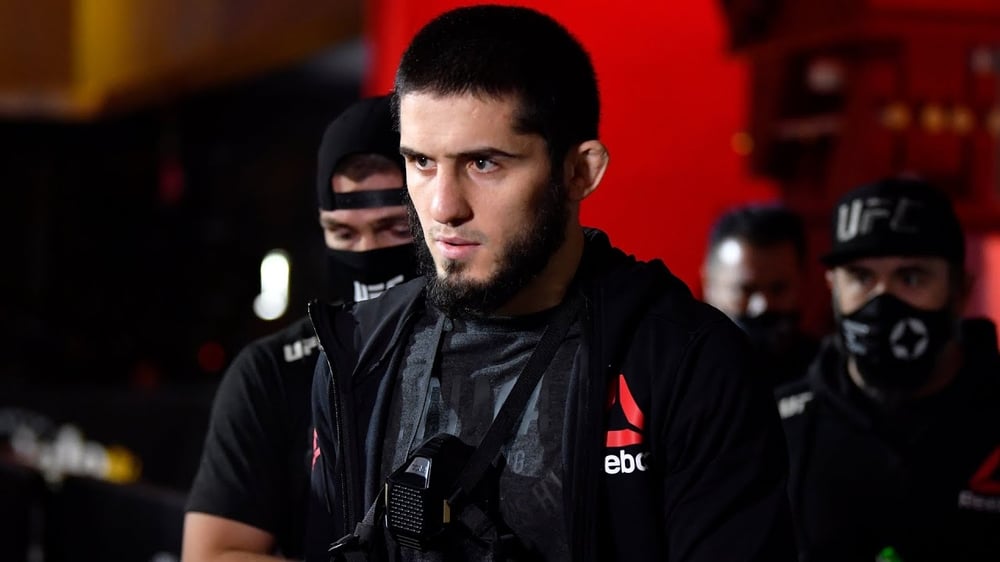
Islam Ramazanovich Makhachev was born on October 27, 1991, in the mountain village of Burshi, located deep in Dagestan, Russia. In the early 1990s, the region was still recovering from the fall of the Soviet Union. As you might imagine, life was hard. Resources were scarce. For many young boys, discipline through was the only roadmap to a better life. Like many Dagestani children, Islam was introduced to combat sports early, with wrestling and sambo forming the backbone of his youth. Much of his backstory is mysterious, as he’s famously closed off about speaking about it. He began training under Abdulmanap Nurmagomedov, a revered coach in the region, who approached sport as a complete lifestyle. One that included structure, humility, and unwavering consistency. Alongside him was another boy, the famous Khabib Nurmagomedov. Though not related by blood, Islam and Khabib grew up like brothers. They were raised in nearby regions, trained in the same systems, and pushed each other from childhood. Khabib is three years older than Islam, and he’s offered more insights into Islam’s than anyone else.
“You know, like what interesting it was 2000?” smiles Nurmagomedov. “Like 21 years ago, we're going to same school with Islam, and he was younger than me. Like 3 years, and it was like in gym. They go to the one tournament in other city, he and my big brother Shamil. Like they go like 15 people, only two guys become champion: Islam and Shamil. Okay, Shamir is a champion, I understand. Who are you? He's like small guy, like 24 kilo, you know, like he come back with medal, you know, it's since then that time and now 20 years later, this guy keep doing the same. Winning.”
According to multiple interviews, Islam's personality mirrored his environment. He was reserved, resilient, and always focused. While others in the region drifted toward distraction, Islam stayed locked into training, education, and local competitions, particularly combat sambo, where he rose to become a world champion before ever entering the UFC.
“He was always competitive and hated losing,” Khabib Nurmagomedov told the UFC. “Whatever martial art he competed in, he was successful. In school, I think he didn’t do bad. I had excellent marks through grade 7, then it went downhill a bit. Either way, I put effort into my education. I know he [Makhachev] wasn’t a troublemaker. Islam was more disciplined.”
His childhood, though not well-documented in media soundbites, is defined by the kind of Dagestani quiet toughness that doesn’t need embellishment. He wasn’t forged in the spotlight. He was shaped in the mountains thanks to cold mornings, under strict supervision, with nothing handed and everything earned. Traits he’s clearly embraced to this day.
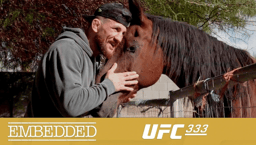
MATT HUGHES – RAISED BY THE LAND
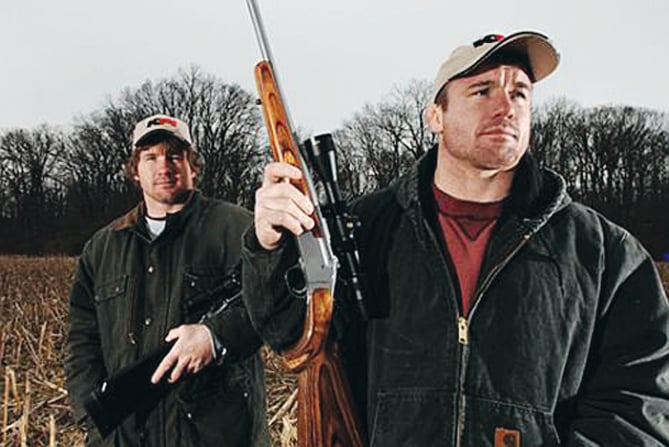
Matthew Allen Hughes was born on October 13, 1973, in Hillsboro, Illinois. He grew up on a small farm with his twin brother Mark and older sister Beth. They were a working-class Christian family where hard work wasn’t optional and sweat was expected. From a young age, the Hughes twins were taught to rise before the sun, milk cows, tend livestock, haul hay, and fix what needed fixing. The farm, as Matt later wrote in his book Made in America, was a place where the rules were simple. You needed to stay busy. Stay humble and never ask for help if you could do it yourself. He’s on the record as saying that when you’re a little boy, a farm is the best playground you could imagine. His book outlines how they didn’t have much, but they had each other and the work. By the time they were teenagers, Matt and Mark had already forged a deep bond through daily wrestling matches. These daily tussles happened on the carpet, in the barn, anywhere with space to grapple. That kind of daily intensity, no doubt fuelled by the fires of sibling rivalry, is something that translated into dominance on the mat. At Hillsboro High School, Matt went 131-2 over his final two seasons and became a two-time Illinois state wrestling champion. Wrestling gave him direction, and faith kept him grounded.
“My mom would always say, ‘You boys are going to fight each other into hell one day,’” Matt once wrote. “But it wasn’t about hate, it was about testing each other to be better.”
After high school, he wrestled at Southwestern Illinois College and later Eastern Illinois University, where he became a two-time NCAA Division I All-American. But he never shook the farm-boy mindset, even as he transitioned into MMA in the late 1990s. His debut came in 1998 at the JKD Challenge, where he won by knockout in just 15 seconds. That same year, he began his UFC journey. It was the start of a chapter that would eventually lead to two welterweight titles and a Hall of Fame career. It all started, though, with a hay bale and a twin brother who wouldn’t quit.