


Issue 226
February 2026
Ray Klerck dives into the 2026 KO science to reveal why your next fight ender depends on mastering peak torque a lot more than just chasing speed.
When Mauricio Ruffy turned Rafael Fiziev into a highlight reel at UFC 325, it’s tempting to write that off as fast-twitch magic, but the muscle science behind a knockout is often clouded in the fog created by genetic gifts. A February 2026 paper in SportMont has taught us some valuable lessons about where this KO strength truly comes from, outlining how, if you want your power to show up under the bright lights, you may need to stop obsessing about how fast you can pull the trigger and focus more on how much torque you can generate. Torque is the rotational oomph your joints can produce. Think of it as the difference between a ceiling fan gently moving office air and a plane engine’s props flying you across the Atlantic. For years, speed was the king, and we believed the time it took a strike to reach peak force might was the secret sauce for fight-ending blows. However, the data on 17 national-level MMA suggest that it may be your maximal strength capacity at play. This is your ability to produce, absorb, and hold peak torque. It may dictate whether you’re sending opponents to the canvas like Nikita Krylov just did to Modestas Bukauskas or just shaving a little bark off their chin. Here’s the latest thoughts on how it works.
THE PEAK TORQUE PARADOX
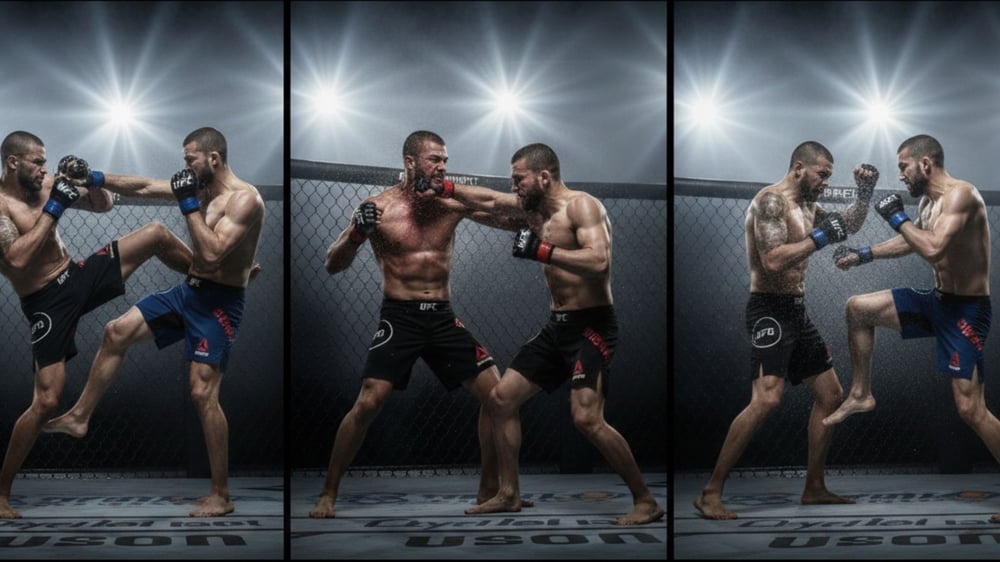
Punch speed is not the ultimate predictor for KO. This new research puts an expiration date on the idea that Time to Peak Torque (TTPT) is a reliable predictor of explosive performance. Instead, Peak Torque (PT), which is your maximum rotational oomph, was the heavyweight champ of the data. For instance, in the upper limbs, the study found performance in the standard countermovement push-up was significantly influenced by the peak torque of the shoulder flexors, which showed a massive relationship across concentric, eccentric, and isometric contractions. In plain speak, this move is like a vertical jump for your upper body, and it predicts punch power. To do it, you drop fast into a push-up, then explode off the floor like you’re trying to shove a door off its hinges. The study found that your ability to launch into the air from a push-up position is heavily dictated by your shoulder flexors, which are the muscles (pecs, biceps, anterior delts) that help you punch and frame. This happens across three specific phases. There’s the brake, or eccentric phase, which is your ability to absorb force as you lower yourself into the bottom position of a push-up. Next comes the hold, the isometric phase, which is the bottom position that gives the statue-like strength needed to hold a frame in a clinch. Finally, there’s the blast, the concentric phase, which is the go button that creates a powerful punch-like shove. To be an elite performer in MMA, you have to be a triple threat in all three areas. If you’re only strong on the blast but have the braking power of a shopping trolley on a downhill, your explosive power will leak out before it ever reaches your opponent’s jaw.
THE GROUND GAME OF STRIKING
Fight ending power is equal parts a top and bottom affair, with the lower limbs serving as the engine room of every blow thrown. There was a strong link between lower-body explosive power and the peak torque (PT) of your knee and hip extensors. Essentially, the heavier you can "sit" on your punches and the more rotational oomph you can generate from your hips, the more likely you are to deliver a fight-ending punctuation mark like Benoit Saint-Denis recently gave to Dan Hooker. The numbers show that knee extension PT was linked to performance across all jump tests, which impacts your ability to launch a strike or a sprawl. Naturally, much of this comes from your lower half, in your knee flexors. This includes a murderer’s row of heavy-hitting muscles like your hamstrings, calves, and popliteal. So, while everyone loves a fast punch, it’s the ability to drive through the floor that can differentiate the strikers from the statues. The knee flexors' eccentric strength, which is their ability to absorb force and maintain stability, is what’s behind a fighter’s ability to stay dangerous late in the third round or start looking as happy as a penguin in a microwave. If you aren't training your hips and knees to produce and hold peak torque, you’re just throwing arm-powered punches with no hope of a highlight reel.
A GRAPPLING INSURANCE POLICY
Since roughly 50% of MMA matches end up as a floor-based puzzle, failing to develop hold-based strength is dumber than a horror movie character who leaves the group to investigate a noise in the basement. Interestingly, peak torque in the knee flexors during isometric contraction, that statue-like strength needed to lock a position, was significantly linked to every explosive jump test in the data. This means if you can’t squeeze and hold with absolute authority, your explosive blast won't have a stable platform to launch from. High levels of isokinetic strength don’t just help you land the first shot; they act as a career-extender by preventing your technique from rattling apart like a cheap lawnmower. To optimize explosive power development, coaches may want to prioritize the knee and hip extensors and the elbow and shoulder flexors. These are the key cogs that ensure your power doesn't just show up for the walkout but stays until the final bell. By targeting these muscle groups through all three modes, namely the push, the brake, and the hold, you’re optimizing your chances of fighting stronger.

HOW TO USE THE RESEARCH
If your current training plan is built on saccharine enthusiasm and lacks peak torque, you’re just swotting for a test you’re destined to fail. Implementing these findings means moving beyond the bread-and-butter strength-training reps that so many fighters stick to. To build that KO power, it’s worth prioritizing the heavy hitters identified by the research: the knee and hip extensors, and the elbow and shoulder flexors. Start by integrating movements that force you to be the boss of the brake, and hold, as much as the blast. This means using tempo-based lifting with slow, controlled eccentric descents to build braking power, followed by a three-second isometric pause at the bottom of a rep to develop that statue-like clinch strength, and finishing with an explosive concentric drive that copies a piston-like strike. To replicate some of the study’s findings, focus on the upper limbs and punching potential. An easy win is to prioritize the Standard Countermovement Push-up. This isn’t your standard burnout set. You’d drop your chest fast, then immediately explode off the floor to drive torque in the shoulder and elbow flexors. For variations that hammer home the hold section, try an exercise like the Kneeling Stop Push-ups, which the researchers used to measure explosive power from a dead stop, forcing your extensors to wake up and work without the benefit of momentum. For the lower half, the study suggests that your spring is rooted in the peak torque of your extensors, so master the Countermovement Jump to sharpen that ground-up power. You’d start from a tall, athletic stance, then rapidly dip by dropping your hips so you load your muscles like a coiled spring, then immediately explode vertically as high as you can. To make sure your hips are actually contributing to the fight, integrate the Squat Jump (SJ), which removes the bounce and forces your hip extensors to generate pure, raw torque from a deep position. For the other exercises in your routine, aim for 3–5 sets of 3–5 reps for these explosive movements, focusing on absolute quality over cardio quantity. By targeting these cogs in all three modes, which include the push, the brake, and the hold, you’re training to be smart about how you develop force.
FIND YOUR POWER
The devil comes in the form of comfort, telling you to rest before the work is done, but in the fight game, that comfort is a loss waiting to happen. It’s something that starts in the weight room, where you’re mindlessly doing reps, rather than focusing on quality reps that are built to give you the stabilization you need to launch a fight-ending punch. Stability, when built correctly, is something that will help you generate the force you need to cut loose and create that KO power that ends fights in round one.